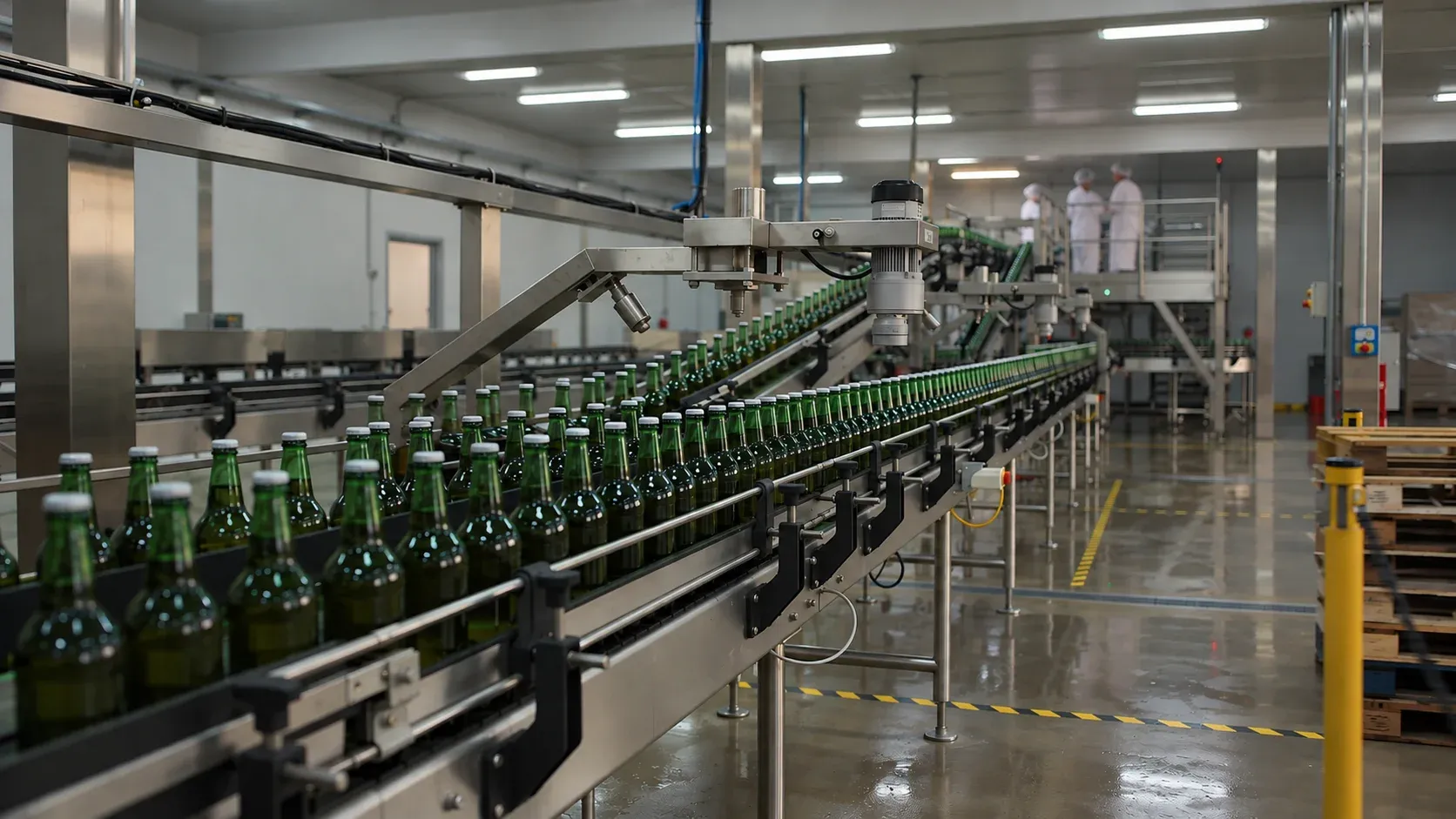
Walk onto almost any modern bottling floor these days and you'll notice something: it's quieter than you'd expect. Not because less is happening, but because fewer people are standing around watching machines think for them. That shift from manual oversight to systems that sense, decide, and adjust on their own is what's actually driving the productivity gains everyone in beverage production keeps talking about.
I've walked plants that still run on paper checklists and gut instinct, and I've walked plants where a technician can see every filler head's fill accuracy in real time from a tablet. The difference is not subtle it's the difference between reacting to problems and never letting them happen. And increasingly, beverage packaging automation is what separates the two.
The Role of Smart Automation in Modern Beverage Production
The digital transformation in a beverages manufacturing facility is no longer just a buzzword but involves PLCs communicating with sensors, sensors communicating with data historians, and data historians sending information to dashboards that a plant manager can review. The integration of the IoT concept implies that the chiller, filler, and labelling systems can all connect on one data line.
What this actually changes on the floor: instead of an operator noticing a problem after twenty cases have already gone wrong, the system flags a drift in torque or fill weight the moment it happens. That's the core promise of smart beverage production catching small deviations before they become large ones. Because every machine logs its own performance, plant directors get a clearer picture of where their real bottlenecks live, rather than guessing based on whoever complained loudest that week.
How Automated Systems Reduce Downtime in Beverage Production
Downtime is the quiet killer of any beverage factory's margins. A line that's stopped isn't just idle it's burning labour cost, missing delivery windows, and usually causing a scramble to figure out what broke and why. Here are a number of angles automated systems use to solve this issue.
Real time sensing feedback guarantees that such parameters as vibration, temperature, and pressure levels are checked constantly against the baseline, rather than on a weekly check up tour. If some bearing begins overheating or the flow rate of the pump drops, predictive diagnostics will alert about this beforehand. The work order will be "Replace this bearing next Tuesday" rather than a distress call at 2 a.m. Smart scheduling adds another layer. Instead of running every SKU change as a manual, trial and error process, the system pre loads recipe parameters and adjusts conveyor speeds automatically. This is precisely the sort of foundation that ensures efficiency in beverage manufacturing less unexpected downtime, reduced changeover times, and maintenance that is scheduled and not simply thrust upon you.
Unexpected downtime in a high speed environment can cost thousands of dollars per hour when taking into account lost throughput and overtime labour. Even avoiding a couple of such occurrences per year will easily justify the investment.
Improving Speed and Output with Automated Beverage Production Lines
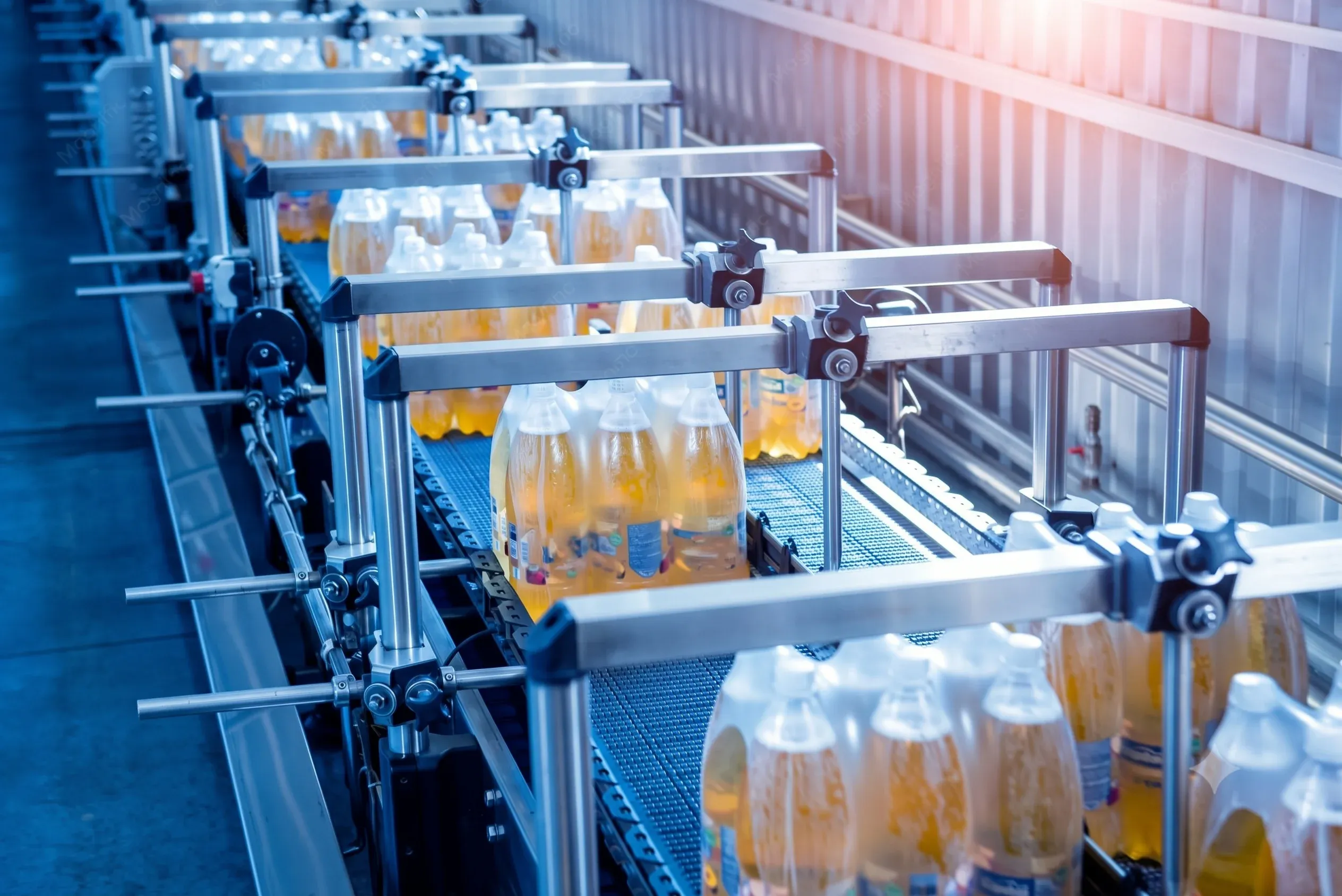
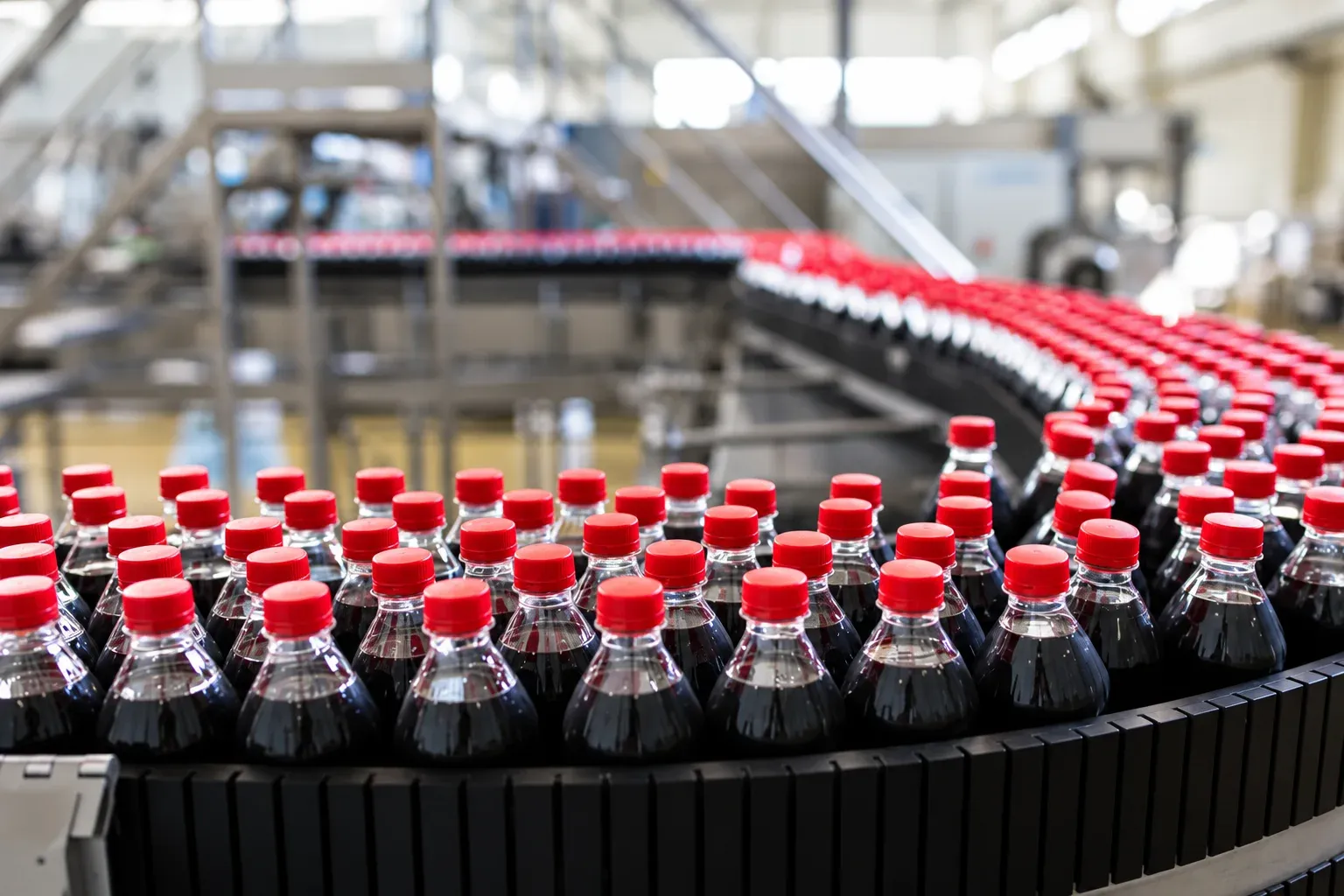
Here's where the mechanical side gets genuinely interesting. An automated bottling line synchronizes conveyors, star wheels, and fillers so containers move through the process at a pace that would be impossible to coordinate by hand. Servo driven motion control replaces fixed speed motors, letting each section of the line adjust independently based on what's actually happening upstream and downstream.
Precision container handling matters more than people assume. A single misaligned bottle at high speed can cause a jam that costs several minutes of clean multiply that across a shift and it adds up. Vision guided handoffs and cushioned star wheel pockets reduce those micro stoppages that never show up on a shift report but quietly eat into your numbers all day.
The result: beverage production lines running with coordinated automation and genuine beverage packaging automation sustain higher speeds without the wear and tear or product damage that comes from pushing older, semi manual equipment past its comfortable range.
Comparative Analysis: Traditional Plants vs Smart Automated Facilities
| Parameter | Traditional Manual / Semi Automated Plant | Smart Automated Facility |
|---|---|---|
| Line Speed & Throughput | Limited by operator pace and manual adjustments; frequent micro stops | Synchronized servo control sustains higher, consistent speeds |
| Error & Waste Rate | Higher fill variance, more manual rejects, inconsistent quality checks | Real time sensor correction keeps waste and rework near minimal levels |
| Data Visibility & Predictive Maintenance | Reactive repairs based on visible failure or scheduled guesswork | Continuous monitoring flags issues before they cause downtime |
| Labor Cost Efficiency | More staff needed for monitoring, manual adjustments, and troubleshooting | Fewer operators required per line; staff shift toward higher value oversight roles |
How Automation Enhances Quality Control in Beverage Production
Quality control used to mean pulling random samples off the line and hoping the batch in between was fine. That's not good enough anymore, and honestly, it never really was it just used to be the best option available.
A modern beverage filling machine paired with vision systems checks every single container, not a sample of them. Fill level accuracy is verified immediately, so any under filled bottles are detected and re routed before reaching a case. Leak detectors use either a vacuum test or a pressure test on each bottle cap to ensure no leaks occur and will not be discovered by a customer several weeks down the road.
Container integrity checks cracks, deformities, contamination happen through high speed cameras inspecting thousands of containers per hour at a consistency no human could match on an eight hour shift. It's not about replacing judgment; it's about applying it where it adds value, while machines handle the repetitive checking fatigue makes unreliable.
Reducing Production Costs Through Smart Automation
Cost savings from an automated bottling line rarely come from one dramatic change. They add up from a dozen smaller ones running quietly in the background.
Energy consumption drops when compressors, chillers, and pumps run based on actual demand instead of full output around the clock. Variable frequency drives adjust motor speed to match load, which on a 24 hour schedule adds up to real savings on the utility bill.
Raw material waste shrinks because precise dosing means you're not routinely overfilling containers "just to be safe." Even half a gram of overfill per bottle, multiplied across a few hundred thousand units a month, is real money walking out the door.
Labor deployment shifts too not necessarily fewer people overall, but people doing work that actually needs a human: troubleshooting, quality oversight, process improvement, rather than the same repetitive motion for eight hours.
Why Choose SEPPA Solutions for Smarter Beverage Production?
This is the part where automation writeups usually turn into a sales pitch, so I'll keep it grounded. SEPPA Solutions builds and integrates the machinery discussed here PET blow molding systems, rinser filler capper lines, labelling and packaging equipment designed for manufacturers who need reliability at scale, not just impressive spec sheets.
What sets a genuine engineering partner apart is end to end support: helping a plant plan its automation architecture, not just drop in equipment and leave. SEPPA Solutions works alongside plant teams from line design through commissioning and ongoing support, which matters more once you're three years in and something needs troubleshooting at 11 p.m.
Final Thoughts: Building a More Efficient Future for Beverage Production
None of this is about chasing technology for its own sake. It's about running a beverage factory with real beverage production efficiency one that doesn't lose money to preventable downtime, doesn't waste product on avoidable errors, and doesn't burn out staff doing work a sensor could handle more reliably. Smart automation, done thoughtfully, gives plant directors the visibility and control to make that happen and it positions the business to keep up as customer expectations and SKU complexity keep climbing.
Frequently Asked Questions
1. How do we transition from manual to automated lines without shutting down production?
Most plants phase it in section by section starting with the biggest bottleneck, usually filling or labelling rather than converting everything at once.
2. What's the realistic ROI timeline for automation investment?
It depends on the size of the plant as well as its efficiency but a large number of plants will start showing profits within the first two to four years.
3. How much maintenance does automated equipment actually require?
Less unplanned maintenance, but more scheduled maintenance and that trade is worth it, since planned service windows are far cheaper than emergency line down repairs.
4. Can automated systems handle multiple product SKUs and container types?
Yes. Modern control systems store recipe parameters for each SKU and each beverage filling machine on the line, so changeovers become a software selection rather than a manual re calibration of every station.
5. Is it safe to scale automation infrastructure gradually?
Absolutely, and that is the smarter approach too. Phase based scaling will enable a plant to justify each new increment based on actual production figures.