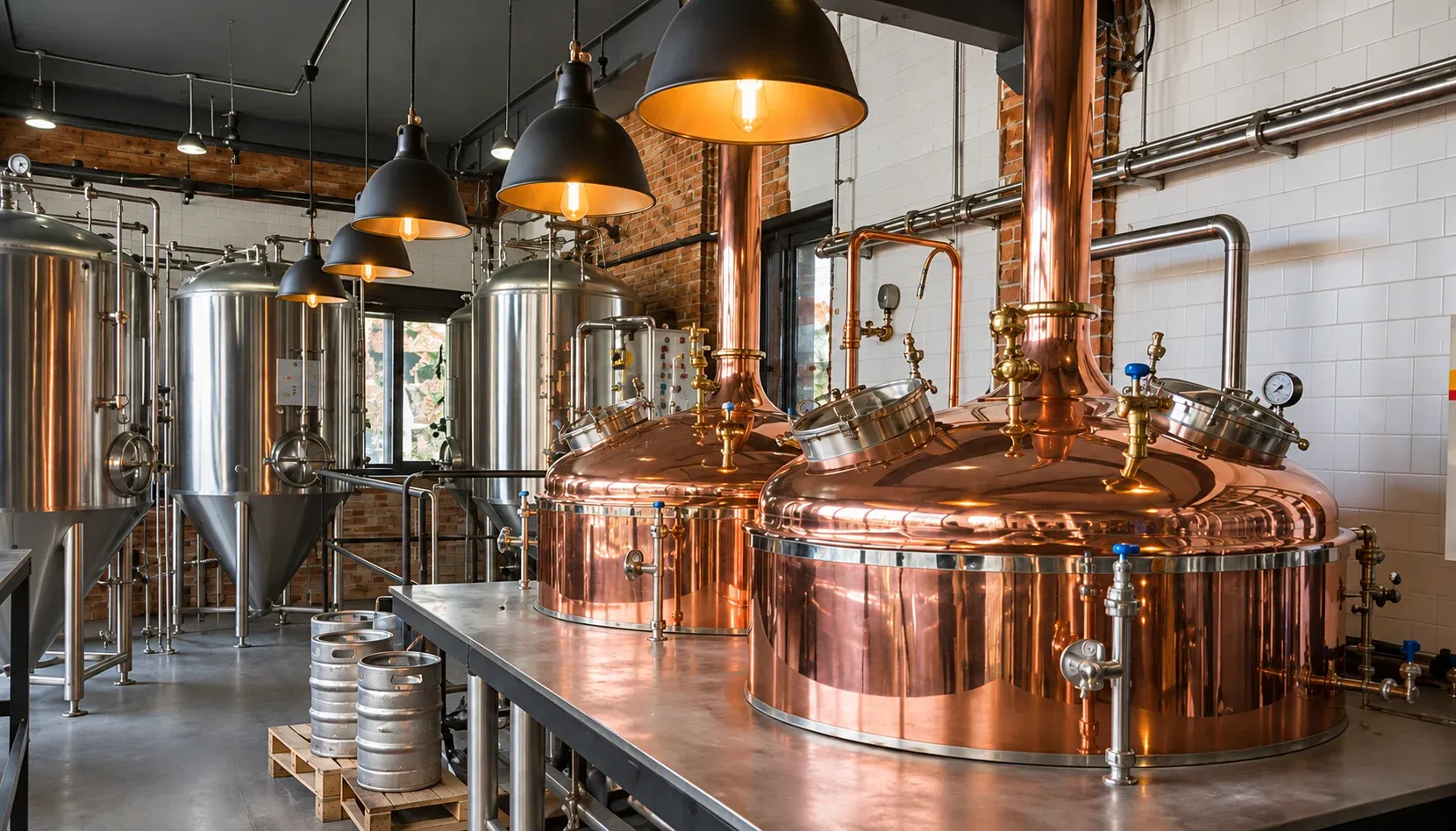
Walk onto any beverage manufacturing floor today and something's different. Ten years ago a plant manager watched the conveyor and adjusted fill levels by eye. Now a sensor flags a pressure drop before anyone hears the pump strain. A dashboard tells you which line is losing money before the shift even ends.
I've watched enough plants go through this transition to say automation isn't a buzzword in beverage manufacturing anymore, it's just how you stay competitive when labour is hard to find and margins are thin. Customers expect a can of soda to taste identical whether it came off a line in Ohio or Osaka. This piece walks through what's actually changed on the floor, what the machines are doing, and why the payoff is usually bigger than owners expect going in.
The Role of Automation in Beverage Manufacturing
Automation in beverage manufacturing used to mean one robotic palletizer stacking cases at the end of a line, with everything before it done by hand. Not anymore. An automated beverage manufacturing plant has its systems operating right from the point that the raw materials enter the facility up until the time when the pallet is packed and transported by the truck.
The programmable logic controller (PLC) synchronizes many machines such that the filling machine, labelling machine, and packing machine work simultaneously rather than competing against each other. Above the PLC is the SCADA system that allows one person see what six people would have been able to see in six different stations. The job hasn't gone away. It's just moved from watching the machine to catching the problem before it costs you a shift.
Why This Shift Matters Now
Margins have always been thin in beverage manufacturing. What's changed is the labour side. Fewer people want repetitive floor work, and the ones who do are expensive to keep trained on equipment that keeps evolving. Automation doesn't erase that problem. It just means fewer people stuck doing the repetitive parts, and more of them doing work that actually needs a brain attached.
How Automation Improves Beverage Production Efficiency
Synchronized mechanical arms and precision dosing systems eliminate the tiny stops that eat hours out of a shift. A manual line might lose twenty minutes an hour to jams, misfeeds, or someone stepping away at the wrong moment. An automated line doesn't really notice those problems exist.
Liquid transfer systems dose down to the milliliter, so you're not overfilling every bottle out of caution the way a tired operator might at 2 a.m. That sounds minor. Add it up across three shifts, though, and it's the difference between hitting quota comfortably and running unplanned overtime every Friday. Fewer product giveaways, multiplied across a year of production, is real money. It's usually why beverage manufacturing upgrades start at the filling stage before touching anything downstream.
Automated Equipment Used in Beverage Manufacturing
A tour of a factory today will show you specialized machines, each made for one particular liquid and container.
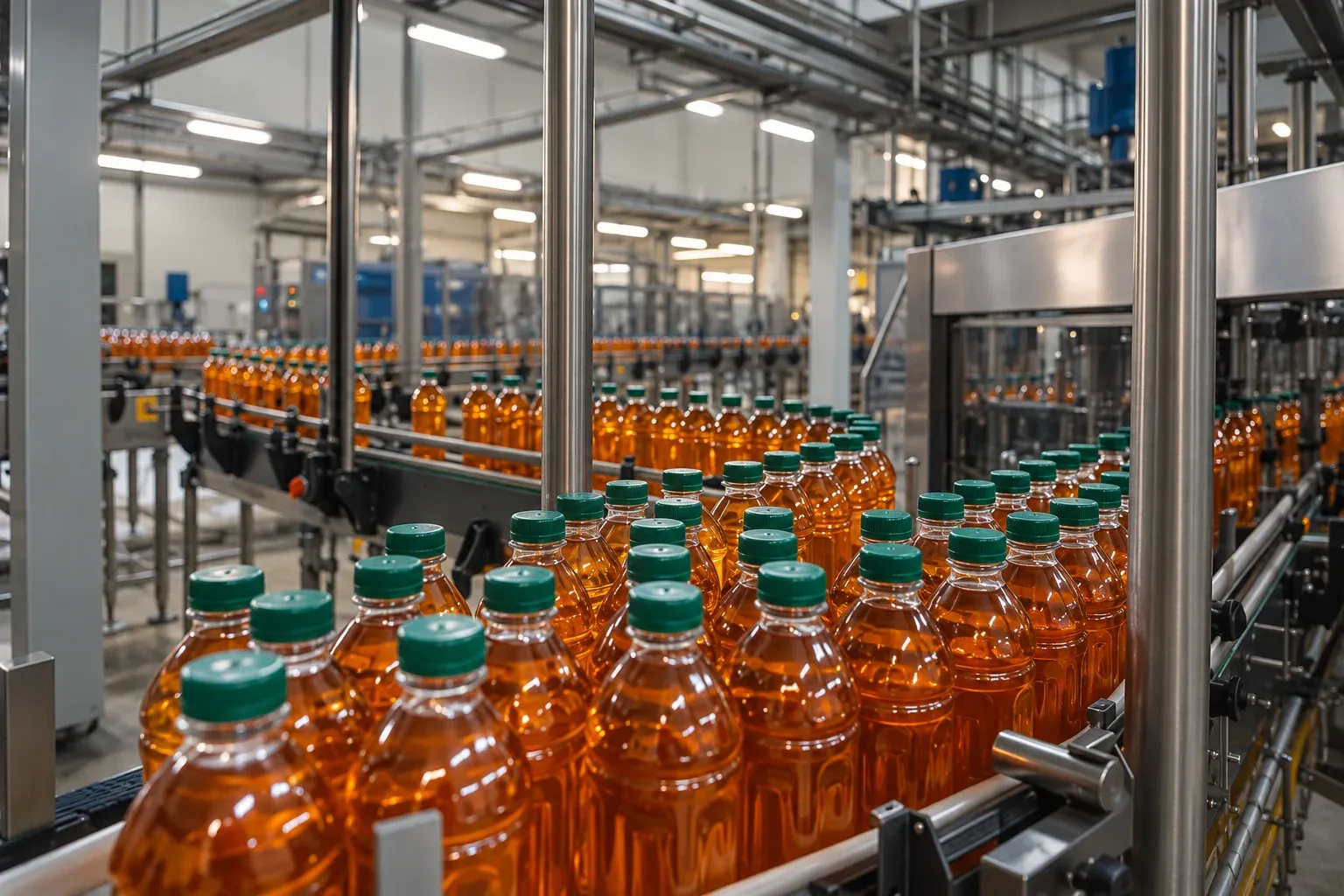
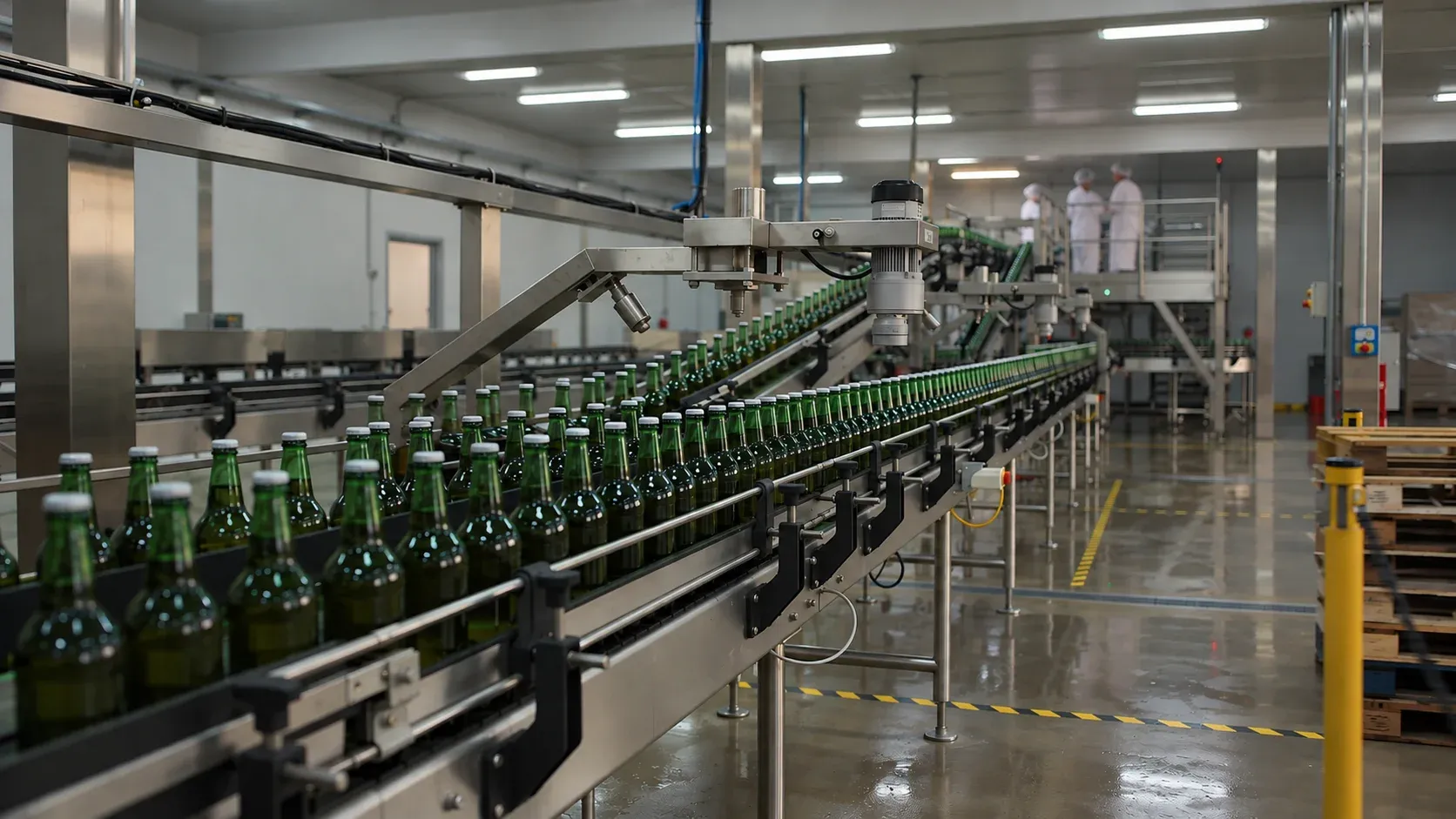
The high speed beverage filler machine does the filling process, regardless of whether the beverage being filled is still water, a carbonated soft drink, or one that is thicker. The juice bottling machine has to work with pulp and viscosity without blocking up the nozzles. Pulp doesn't behave like a clear liquid under pressure, and machines built for water tend to choke on it. A soda canning machine has to seal under carbonation pressure without letting the product go flat before it reaches a shelf. A beer bottling machine usually adds a counter pressure filling stage, since beer foams badly if it's handled carelessly.
These machines do not function independently. Instead, they are all connected using conveyors and one common control system such that any delay in labelling will slow down the filling machine before it. No backlog; no need for an operator to urgently press the stop button.
Comparative Analysis: Manual vs Fully Automated Plants
Here's how the two setups actually compare, side by side.
| Parameter | Traditional Manual / Semi Automated | Fully Automated Smart Plant |
|---|---|---|
| Production Speed & Throughput Consistency | Fluctuates with operator fatigue and shift changes; frequent micro stops | Consistent speed across shifts; minimal unplanned stops |
| Product Error & Wastage Rate | Higher, driven by manual dosing and inconsistent seal checks | Lower, controlled by inline sensors and automated fill verification |
| Labour Dependency & Safety Risks | High headcount on repetitive tasks; more exposure to moving machinery | Fewer hands near active equipment; staff shift to monitoring roles |
| Real Time Data Visibility & OEE Tracking | Limited, often based on end-of-shift paper logs | Continuous, dashboard-based tracking of OEE and downtime causes |
Automation for Quality Control and Product Consistency
Inline vision detects issues that would otherwise be missed by human eye on an assembly line moving too quickly: fill level slightly below required amount, cap slightly loose, label not aligned properly. This system inspects every unit in line; it doesn’t take random samples every twenty minutes.
That matters more than it sounds like it should. In beverage manufacturing, a bad batch that reaches a retailer doesn't just cost you the product. It costs shelf space, and sometimes a customer who doesn't come back. Automated fill level checks and hermetic seal verification run constantly, flagging anything outside tolerance so it gets pulled before it's boxed, not after a complaint shows up. A soda canning machine that catches a bad seam in real time can stop an entire pallet from going out flat and undrinkable weeks later. Nobody finds out until a customer opens a warm can at a barbecue, which is not when you want to find out.
Reducing Production Costs with Beverage Manufacturing Automation
The upfront cost makes plenty of owners hesitate, and honestly, that's a fair reaction. It's a real investment, not a line item you shrug off. But the savings tend to land in places people don't expect at first.
Product lost to overfilling drops. Energy use drops too, since machines run at consistent, tuned speeds instead of an operator's best guess on a Tuesday afternoon. Fewer injuries means lower insurance costs and less downtime scrambling to cover a gap after someone gets hurt. Comprehensive beverage packaging automation changes labour costs in a less obvious way as well: not by cutting every job, but by moving people out of repetitive tasks and into work that actually needs judgment, like troubleshooting and quality oversight. A juice bottling machine that used to need constant manual nozzle cleaning can flag its own clogs now. Over a few years, that shift alone often pays for the equipment.
Smart Technology and Industry 4.0 in Beverage Manufacturing
The IoT sensors that are distributed throughout the beverage production line measure vibration, temperature, and pressure continuously, thereby providing information to the predictive maintenance program. This avoids changing the pump seal at a regular interval regardless of its condition, as the system will warn of wear in advance.
Cloud dashboards let a plant director in one country check throughput at a facility on another continent. That sounds unremarkable now. A decade ago, that same director needed a phone call and yesterday's faxed production log to know the same thing. Predictive maintenance on something like a beer bottling machine's counter pressure valves can catch wear weeks before a seal fails mid run. Most failures give off warning signs long before they actually stop a line, if anyone's watching for them.
Why Choose SEPPES Solutions for Beverage Production?
SEPPES Solutions builds and integrates automated lines for beverage manufacturing plants that want more than a machine dropped on their floor. They want a system built around how their plant actually runs. That means custom line integration instead of a one size fits all package, plus technical support that doesn't vanish the day after installation.
If you're weighing whether to upgrade a legacy line or start from scratch, that ongoing support usually matters more than whatever's printed on the spec sheet. Their engineers work directly with plant teams to spec beverage filling equipment and packaging lines around the product mix already running, instead of making a plant redesign its process around off the shelf machinery.
FAQs About Automation in Beverage Manufacturing
1. What's the payback period for automating a beverage manufacturing line?
Plants will get their money back in two to four years, based on the amount of line capacity and the amount of manual labour being displaced. Plants that had been experiencing losses due to over filling or production stoppages will break even even faster, sometime within a year and a half.
2. Can I automate an existing legacy line instead of replacing it?
Yes, in most cases. Retrofitting sensors, PLCs, and a SCADA layer onto existing beverage filling equipment is common and usually cheaper than a full rebuild. The real limit is how outdated the base machinery is. Some older mechanical systems just don't have room for modern controls, no matter how you retrofit them.
3. How do legacy machines talk to new smart controllers?
With help from industrial communication protocols such as Modbus or OPC-UA, which serve as translators between existing hardware and new software. The integrator usually provides a gateway, which will take inputs from the old machinery and deliver them to the SCADA system of the factory, so all information will be on one screen.
4. Do operators need special training to run an automated line?
Yes, but not as severe as most think. It is more about the transition from manual control of machinery to dashboard monitoring and alerting, which takes a couple of weeks for operators to learn hands on. The hardest part of the transition is psychological trusting the system, not verifying everything manually.
5. Can automation scale as beverage manufacturing production grows?
Yes, and honestly, that's one of the strongest arguments for it. A beverage packaging automation setup is modular by design, so a plant can add filling heads or a second case packer without redesigning the whole facility. Manual lines scale by hiring more people. Automated ones scale by adding modules.