Walk into any commercial beverage factory at six in the morning and you'll see the same thing, plant after plant: tanks getting sanitized, syrup rooms coming up to temperature, a shift supervisor flipping through yesterday's batch reports before the first pallet of raw material even hits the floor. Beverage manufacturing looks deceptively simple from the outside liquid goes in a bottle, bottle goes in a case. Anyone who's actually run a line knows better. What's happening behind that bottle is a long, unforgiving chain of formulation, processing, filling, and packaging a beverage manufacturing workflow that never gets easier just because you've done it a thousand times and one weak link anywhere in it can be the difference between a brand that survives its first year and one that quietly folds under inconsistent quality and shrinking margins.
I've walked new operations hires through this exact beverage manufacturing workflow more times than I can count, and I still explain it the same stubborn way: step by step, naming the equipment, being honest about the failure points nobody warns you about, and pointing out the fixes that separate a lean beverage processing operation from one that's constantly putting out fires. Skipping steps is how plants end up with the problems this guide is about to cover.
Step by Step Beverage Manufacturing Workflow
1. Formulation and Recipe Standardization
Every batch starts on paper, or more realistically, inside a batch management system these days. Beverage manufacturing formulation locks in the exact ratios of water, concentrate, sweeteners, acids, and functional additives. Get this step wrong and nothing downstream matters, full stop a production run lives or dies on recipe consistency, from batch one all the way to batch ten thousand.
2. Water Treatment and Ingredient Preparation
Water usually makes up 85-95% of a finished beverage manufacturing. People forget that until something goes wrong with it, and then it's the first thing everyone blames. Treatment filtration, reverse osmosis, softening happens before anything else touches the tank. Dry ingredients get pre dissolved, syrups get pasteurized or UHT treated, everything staged and ready.
3. Batching and Mixing
Ingredients get blended in a precise sequence inside jacketed mixing tanks with in line dosing systems, temperature and pH and Brix checked continuously. Most beverage processing errors either get caught right here or they get baked permanently into an entire production run. This is not a stage where anyone should be rushing, no matter what the shift schedule says.
4. Pasteurization or Sterilization
Depending on the product juice, a dairy based drink, carbonated soft drink, or RTD tea the batch gets flash pasteurized, HTST treated, or aseptically processed to hit microbial safety targets. Do it wrong and you either wreck the flavor or fail to make the product safe. Neither is acceptable, and I've never met a plant manager who disagrees with that once, usually after learning it the hard way.
5. Carbonation (Where Applicable)
Carbonated products move into a carbonator that injects CO2 under controlled pressure at chilled temperature, right before filling. Timing matters more than people expect here. Carbonation levels drift fast once a product sits around, and that's a lesson most people learn from one bad batch rather than a training manual.
6. Filling and Capping
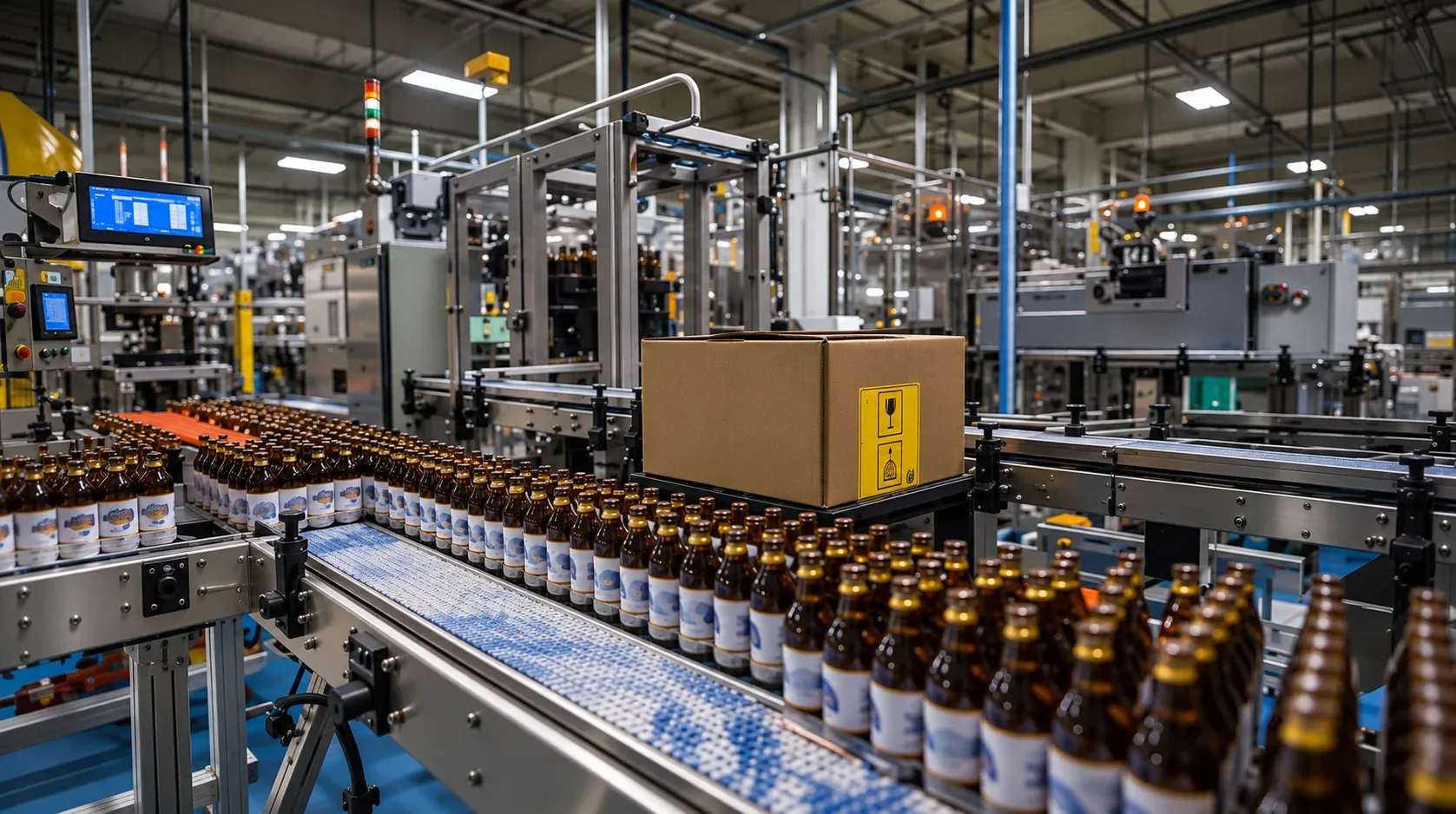
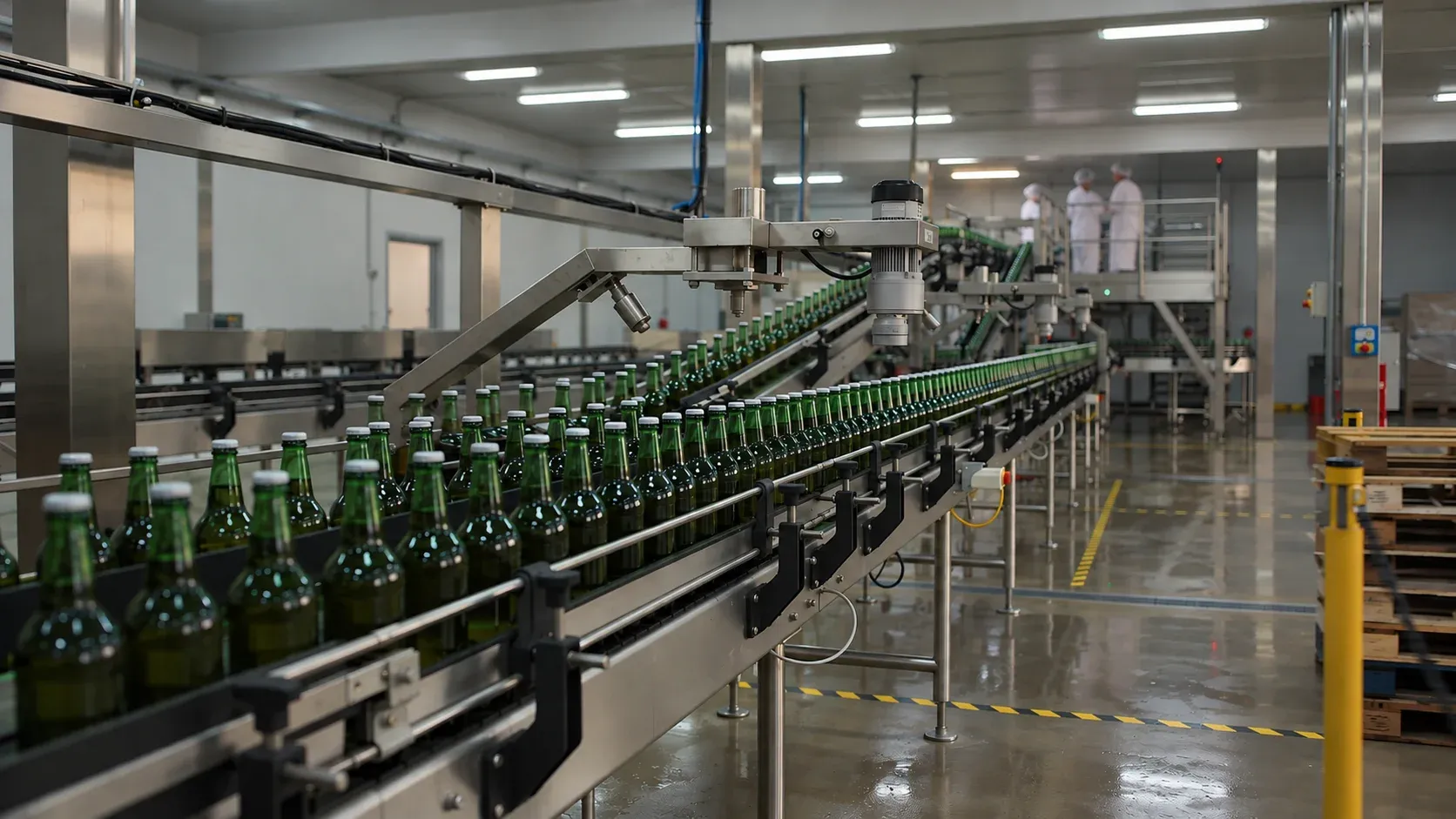
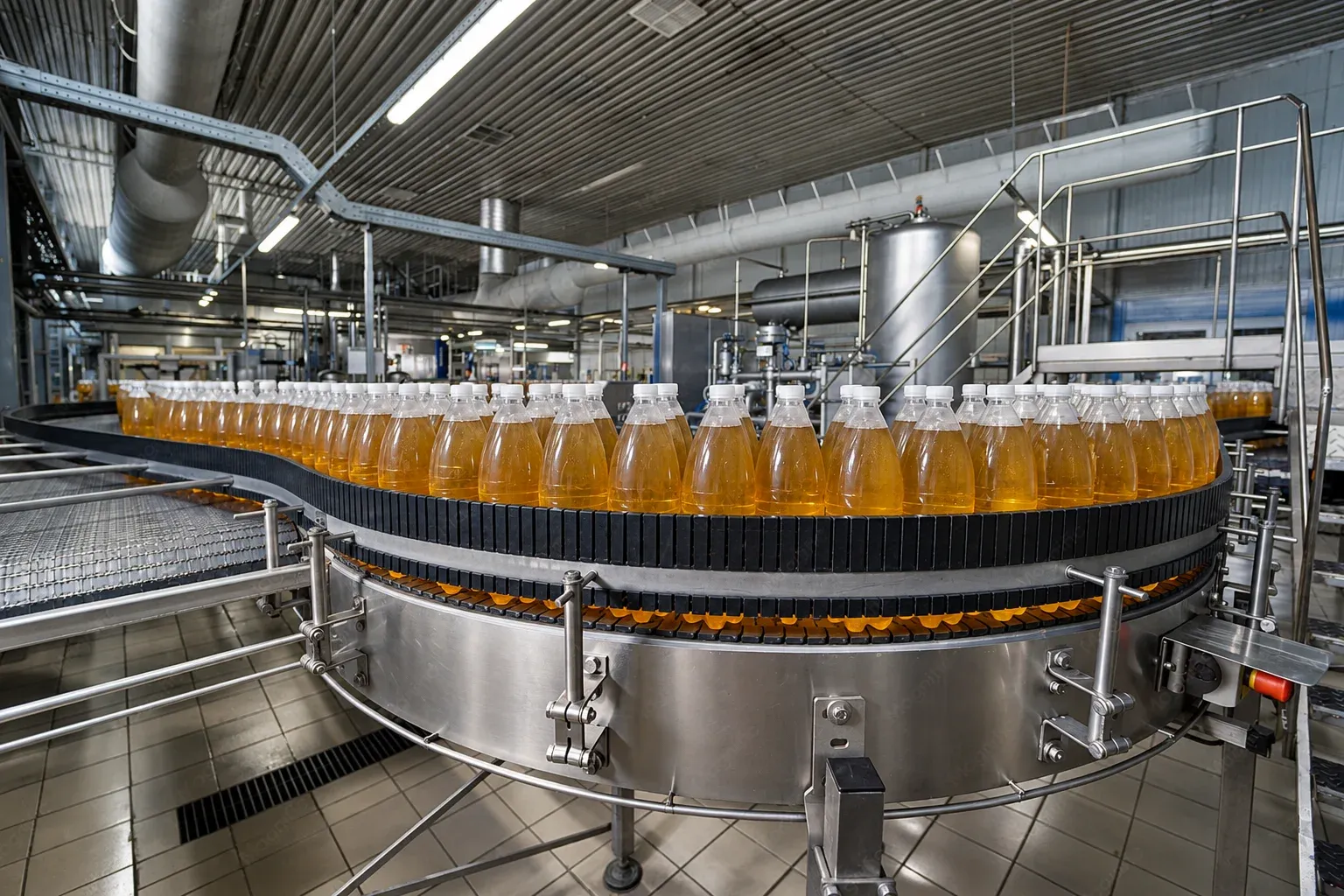
This is the step most people picture when they think of a beverage factory, and honestly it's the one visitors always want to watch on a beverage factory tour. A beverage filling machine doses the exact volume into each container bottle, can, or pouch followed immediately by capping, seaming, or sealing to lock in freshness and keep contamination out.
7. Labeling, Coding, and Secondary Packaging
Labels go on. Batch codes and expiry dates get printed. Finished units get grouped into cases, trays, or shrink wrapped multipacks, staged for palletizing. Not glamorous work, but skip it and you've got unsellable product sitting on a dock.
8. Palletizing, Warehousing, and Distribution
Finished goods are palletized, wrapped, and moved into temperature controlled storage before heading out the door to distributors, retailers, or straight to consumers. This is where most people stop paying attention. That's a mistake a lot of quality damage happens in the last mile, not the factory.
Essential Equipment Used in the Beverage Manufacturing Workflow
A modern beverage factory is really just a chain of specialized machines, each one built to solve one specific bottleneck. Miss a link and you feel it everywhere downstream, usually at the worst possible time. Here's the short list, roughly in the order product moves through them:
• Mixing and blending tanks, automated dosing, consistent batch quality
• Pasteurizers and UHT systems microbial safety without wrecking flavor
• Carbonators for precise CO2 injection in sparkling products
• Beverage filling machines, rotary or linear, hot fill, cold fill, or aseptic depending on the product
• Cappers, seamers, and sealers matched to whatever the container's made of: glass, PET, aluminum, pouch
• Labeling and coding systems, mostly there for compliance and traceability
• Palletizers and case packers to get finished goods out the door at line speed
How to Optimize Your Beverage Manufacturing Workflow for Maximum Efficiency
Reduce Changeover Time
Every SKU switch costs time, and most plants underestimate by how much until they actually track it. Quick change tooling on your beverage filling machine, plus standardized cleaning in place (CIP) cycles, can cut changeover from hours down to minutes the right beverage filling machine setup alone can make that gap disappear. I've watched that single change turn out the equivalent of an extra half day's run on a shift that used to lose it all to tooling swaps. It sounds like a small fix. It isn't.
Build in Redundancy at Chokepoints
The filler and the pasteurizer are almost always your bottleneck, no matter what the plant layout suggests on paper. A single point of failure there stalls the entire beverage processing line. Plan spare parts inventory and preventive maintenance schedules specifically around those two assets treating maintenance as one uniform budget line is how plants get caught out.
Automate Quality Checks
In-line sensors for Brix, pH, fill volume, and cap torque catch defects in real time, which beats finding out after an entire pallet has already shipped. That's not a hypothetical. It's how most recalls in beverage processing actually start, and it's an entirely avoidable one.
Comparative Analysis: Legacy vs. Modern Automated Lines
| Parameter | Manual / Legacy Lines | Modern Automated Lines |
|---|---|---|
| Batch Speed | 500–1,500 units/hour, operator dependent | 8,000–30,000+ units/hour, consistent output |
| Contamination Risk | Higher: more manual handling and open transfers | Lower: closed systems, automated CIP, minimal human contact |
| Labor Costs | High: large crews needed per shift | Lower per unit: fewer operators, higher output per head |
| Yield Accuracy | Variable, dependent on operator skill and fatigue | High: sensor controlled dosing and fill accuracy within fractions of a percent |
Why Choose Seppa Solutions for Beverage Manufacturing?
If you're comparing beverage manufacturing partners, here's the honest pitch. Seppa Solutions builds and supplies the equipment that turns a beverage manufacturing concept into an actual running production line mixing and blending systems, pasteurizers, carbonators, and beverage filling machines engineered for real world throughput, not spec sheet numbers that look good in a sales deck and fall apart on a real production floor. Whether you're an established brand adding a second line or a founder typing "beverage manufacturers near me" into a search bar trying to find localized production support, Seppa Solutions works with businesses at every stage, from a first commercial batch to multi line, multi shift facilities running around the clock. The approach centers on matching equipment to your actual product and volume rather than pushing the biggest machine on the floor. That's not a marketing line it's why drink manufacturers end up with infrastructure that scales with real demand instead of sitting idle half the year, and it's the same reasoning that keeps established drink manufacturers coming back for their second and third lines instead of shopping around each time they expand, since drink manufacturers who switch suppliers every cycle rarely get the servicing relationship that actually matters.
Final Thoughts
An efficient beverage manufacturing workflow doesn't get built by buying the most expensive machinery on the market. Plenty of plants have tried that and still struggled I've watched it happen more than once. It gets built by understanding exactly where your bottlenecks actually live: formulation consistency, filling accuracy, changeover speed, downtime risk, and then investing in the right combination of equipment and process discipline for those specific points, not the ones that look impressive in a boardroom presentation. Get the beverage manufacturing workflow right and everything else margin, shelf life, customer trust tends to follow from it on its own.
Frequently Asked Questions
1. What steps are included in a typical beverage manufacturing workflow?
Formulation, water treatment, batching and mixing, pasteurization or sterilization, carbonation where it applies, filling and capping, labeling, and palletizing for distribution. Skip a step, or rush one, and it shows up somewhere downstream usually at the worst possible time, and usually as a customer complaint rather than an internal catch.
2. What makes a production facility competitive among other drink manufacturers today?
Consistent batch quality matters most among drink manufacturers, honestly, more than anything else on this list. After that: fast changeover times, low contamination risk, and enough flexibility to run multiple SKUs without losing half a shift every time you switch.
3. How does a high efficiency beverage filling machine impact ROI for drink manufacturers?
Faster, more accurate filling cuts down on product giveaway, lowers labor cost per unit, and pushes more units out the door per shift. None of that sounds dramatic on its own. Add it up over a year and it's usually the single biggest lever on the whole line.
4. How should a growing brand start scaling operations?
Start with modular equipment that can expand in stages rather than committing to one massive build you might grow into, or might not. Lock in supplier specs early. Get preventive maintenance into the schedule before volume forces you into reactive fixes by then it's already too late to plan properly.
5. What are quality control best practices in beverage processing?
In line sensor monitoring for Brix, pH, and fill volume. Documented CIP cycles. Incoming ingredient QC on every single lot, no exceptions, even the suppliers you trust. Regular calibration of filling and dosing equipment. None of it is glamorous, but skipping any of it eventually shows up in a customer complaint, and by then the damage to the brand is already done.