Walk onto a plant floor running a well tuned beverage filling line, and you can feel it before you understand it. Bottles move like they know where they're going. The line hums, and that rhythm doesn't happen by accident it's engineered, one synchronized handoff at a time.
I've spent years around rotary fillers, capping turrets, and accumulation tables that quietly save a shift from disaster. Here's what I'd tell an operations manager staring down their first beverage filling line build: what the equipment does, how to lay it out, and how to close the gap between a decent beverage bottling line and a high performance one.
What Is a Beverage Filling Line and How Does It Work?
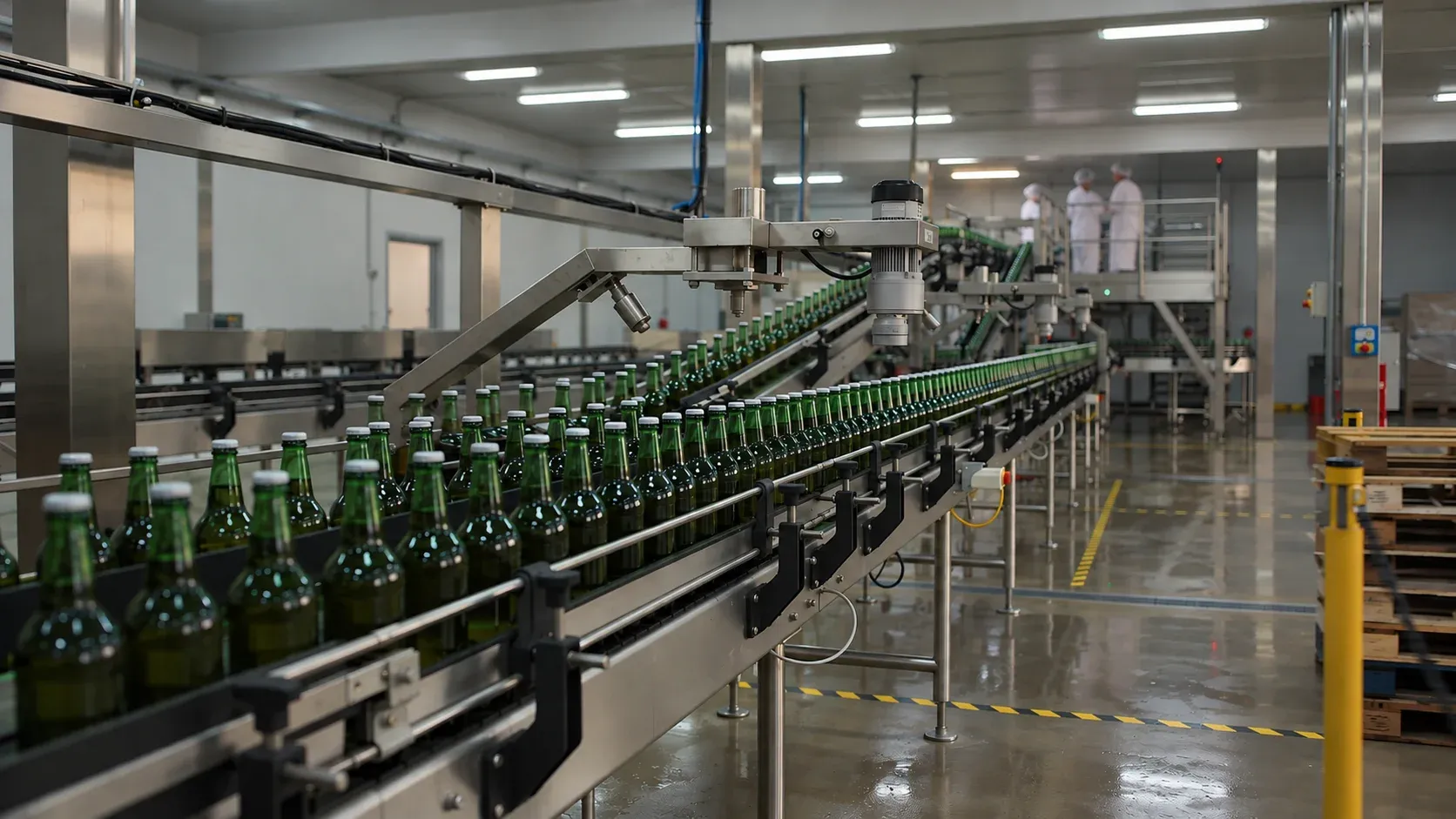
The beverage filling line can be described as the chain of machines involved in taking a bottle from its initial state to being clean, filled, sealed and ready for packaging, without a person ever having to touch the bottle. It is more like a relay race than one big machine because at no point does the baton break stride.
The core of most beverage filling line setups is counter pressure or gravity filling, depending on the product. Carbonated drinks need counter pressure filling to prevent foaming and CO2 loss the bottle is pressurized to match the tank before product flows in, then vented gradually. Still beverages like juice or water often run on simpler gravity filling, gentler on throughput but less picky about pressure balance.
What separates a functioning beverage bottling line from a reliable one is timing. Every rinser, filler, and capper has to run off the same clock, or you get bottlenecks that show up stations downstream from where the real problem started.
Essential Equipment for a Beverage Filling Line
Before designing a beverage filling line, you need to know what beverage packaging equipment actually belongs on the floor. Here's the core hardware, roughly in the order product travels through it:
Container rinsers. Air or water rinsers clear dust and residue before bottles reach the filler. Skip this and you're filling contamination straight into your product.
The beverage filling machine itself. The heart of the operation rotary or linear, counter pressure or gravity. A rotary beverage filling machine handles higher speeds; a linear beverage filling machine is cheaper and easier to service but tops out at lower throughput.
Capping and sealing units. Screw cappers, crown cappers, or induction sealers, matched to your closure type. A mismatched torque setting is one of the most common, and most avoidable, causes of leaker complaints.
Labellers. Self adhesive, hot glue, or shrink sleeve, applied after filling so labels don't get damaged by wet bottles.
Inspection systems. Vision systems checking fill level, cap presence, and label placement before cases seal. Catching a problem here costs one bottle; catching it after a customer opens the case costs far more.
Conveyors and accumulation tables. The connective tissue of the whole beverage packaging equipment lineup, buffering product between stations so a jam at the labeller doesn't stop the whole automatic bottling line.
How to Design a High Performance Beverage Filling Line
Here's where most first time beverage filling line builds go sideways: people buy great individual machines and assume they'll just work together. They won't, not without deliberate design.
Start with your target speed and work backward. A beverage filling machine rated for 300 bottles per minute is useless if your capper caps at 220. The line runs at the speed of its slowest station, full stop. Find that constraint early and either upgrade it or design accumulation around it.
Spatial flow matters more than people expect. You want a layout that minimizes sharp turns, since that's where bottles tip and jam, and leaves room for a technician to reach a jam without shutting down half the floor. On a pet bottle filling line, PET containers flex under pressure at transfer points, so a pet bottle filling line needs tighter conveyor tolerances than a glass line would.
Accumulation zoning is the unsung hero of beverage filling line design. Place buffer tables between your least reliable stations, usually the labeller and case packer, so minor stoppages absorb locally instead of cascading back to the filler. Get this right, and a jam that would stop an unsynchronized automatic bottling line for ten minutes barely registers on the output report whether you're building a glass beverage bottling line or scaling up a pet bottle filling line.
Comparative Analysis: Standalone vs Synchronized Lines
The difference between bolting machines together and actually engineering a beverage filling line shows up fast, whether you're running a pet bottle filling line or a glass beverage bottling line.
| Parameter | Standalone Unsynchronized Machinery | Fully Integrated Synchronized Line |
|---|---|---|
| Line Efficiency & OEE | Typically 45–60%, dragged down by manual handoffs | Typically 75–90%, driven by PLC coordinated timing |
| Product Spillage & Wastage | Higher; inconsistent fill levels and frequent manual jams | Lower; synchronized fill control minimizes overfill |
| Operator Headcount & Labor Costs | More operators needed to bridge gaps manually | Fewer operators; automation handles transfers |
| Changeover Speed & Flexibility | Slow; machines reconfigured separately | Fast; centralized recipes adjust the whole line at once |
Numbers like these are why plant directors rarely go back to standalone equipment once they've seen a synchronized automatic bottling line at work.
Ways to Improve Beverage Filling Line Efficiency
Once your beverage filling line is running, the real work of squeezing out waste begins.
Micro stops are the silent killer of beverage filling line throughput. Individually they're nothing a two second hiccup at the capper, a sensor misread at the labeller. Add them up over a shift and they can eat 10-15% of your theoretical output. Track them by station, not just by total downtime, or you'll never find the pattern.
Clean in place (CIP) scheduling matters more than most plants budget for. Running it too often wastes production time; too rarely risks quality. Base your schedule on changeover frequency and validated hold times, not a generic calendar.
Foam and overfill waste on carbonated runs usually trace back to product temperature and CO2 volumes being out of spec before the bottle reaches the filler. Get your upstream carbonation dialled in, and half your beverage filling machine complaints disappear before you touch the machine itself. Don't underestimate operator training, either a well designed beverage filling machine still needs someone who can spot a fill curve drifting out of tolerance.
Beverage Filling Line Automation & Production Technology
Modern automation has changed what's possible on the floor. PLC driven synchronization means every station on an automatic bottling line, from rinser to labeller, runs off a shared timing signal instead of running independently.
Smart sensors catch problems before they become downtime. Load cells detect underfilled bottles in real time, vision systems flag cap torque issues before a case seals, and vibration sensors on bearings flag a failing component days before it fails, turning an outage into a scheduled swap.
Real time telemetry is the biggest shift of the last decade. Plant managers can watch OEE and station output on a beverage filling line from a tablet instead of an end of shift report. That visibility separates a modern automatic bottling line from equipment that's merely fast speed without data is just guesswork running quickly.
Integrating Beverage Filling & Packaging Equipment
The wet end and the dry end of a plant are commonly designed by two different persons at two different times, and it is evident. A bottle filling machine may work perfectly fine but create problems due to the lack of matching size of labellers, shrink wrappers, and case packers after it.
The handoff points are where problems hide. Bottle spacing off the filler has to match what your labeller expects, and case pack patterns need to align with your palletizer's grip geometry. Get these details wrong, and two pieces of beverage packaging equipment end up fighting each other at the connection point. Good beverage packaging equipment integration means treating the whole floor as one system during design, not bolting a dry end onto a finished beverage bottling line as an afterthought cheaper to fix on paper than on concrete with conduit already run.
Why Choose SEPPES Solutions for Beverage Production?
We've built SEPPES Solutions around one idea: a beverage filling line is only as good as the engineering behind its handoffs, not just the machines themselves. Our team designs, fabricates, and integrates complete beverage packaging equipment, from rinser to palletizer, so you're not stitching together five vendors' worth of gear and hoping it plays nice. That means custom fabrication when your product doesn't fit an off the shelf beverage filling machine, full line integration so your beverage filling machine and beverage packaging equipment talk to each other, and ongoing support once your automatic bottling line is running. We've sat across the table from plant directors who inherited a mismatched beverage bottling line, and we'd rather help you build it right the first time.
Beverage Filling Line FAQs
1. How do I calculate target OEE for my line?
Multiply availability (run time over planned time) by performance (actual speed over ideal speed) by quality (good units over total units). Most synchronized beverage filling lines target 75-85% OEE.
2. How do I manage multi format bottle changeovers efficiently?
Where possible, standardize the changeover components among different formats and use quick change tooling for guide rails and star wheels. An optimally configured automatic bottling line can do a changeover in less than 20 minutes.
3. What air pressure do rinsing and capping systems require?
Most rinsers and cappers on a beverage bottling line run on 5-7 bar of clean, dry compressed air. Undersized compressors commonly cause inconsistent capping torque.
4. How do I troubleshoot persistent foaming?
Check product temperature, then CO2 volumes, then fill valve venting timing. Foaming is rarely a filler fault alone it's usually an upstream carbonation problem showing up downstream.
5. How do I scale line speed as demand grows?
Design your accumulation zones for your five year target speed even if your pet bottle filling line runs slower today. Retrofitting a beverage filling machine is easier than retrofitting the conveyor layout.