Overview of Modern PET Bottle Manufacturing Technology
Walk into almost any beverage plant on earth and you'll find the same material doing the heavy lifting: polyethylene terephthalate, or PET. It's light, it's clear, it survives a drop test that would shatter glass, and it costs a fraction of what alternative packaging runs. That combination is exactly why pet bottle production has become the default choice for water, soft drinks, juices, and household and personal care products alike.
What's changed isn't the polymer it's how plants turn it into a finished container. A decade ago, a mid sized line struggled to hit 8,000 bottles an hour with consistent wall thickness. Today, a well tuned rotary system can more than double that output while using less compressed air per bottle, thanks to better heating control and machines that respond to their own sensors in real time.
For plant owners and packaging engineers, understanding this technology isn't optional anymore. Energy costs, resin prices, and customer expectations around bottle weight have all tightened at once. Getting the pet bottle manufacturing process right is now a margin question as much as an engineering one.
How the PET Bottle Production Process Works: From PET Preform to Finished Bottle
Every bottle starts life as a preform a small, thick walled test tube shaped piece of PET, injection molded and cooled before it ever reaches your bottling line. The actual pet bottle manufacturing process begins the moment that preform enters the blow molder.
Step 1: Thermal Conditioning
The preform passes through infrared lamps arranged in mapped heating zones. This isn't uniform heating different sections need different temperatures depending on how much they'll stretch. Get the profile wrong and you end up with pearlescence or a base too thin for carbonation pressure.
Step 2: Biaxial Stretching
Once the preform hits its target temperature (typically 95–110°C), a servo driven stretch rod pushes down through the center while low pressure air begins the first expansion. Material stretches lengthwise and outward simultaneously the " biaxial" part which gives finished bottles their strength to weight ratio. Rush this step and you'll get weak spots that fail under load.
Step 3: High Pressure Blow and Ejection
With the preform pre stretched into rough bottle shape, high pressure air usually 35 to 40 bar forces material into the final mold cavity in a fraction of a second. The mold is temperature controlled, which locks the polymer structure in place and sets the bottle's final clarity. The bottle ejects, the mold cycles open, and the next preform moves in. This entire sequence repeats dozens of times per minute per cavity.
Essential Machinery and Equipment Used in PET Bottle Production
No single pet bottle manufacturing machine does this job alone. A functioning line is a small ecosystem of equipment working in sync.
The core forming unit. Whether you call it a pet bottle making machine or a pet bottle blowing machine, this is the heart of the operation the unit housing the heating tunnel, stretch rods, and blow molds. Cavity count is usually the first spec buyers check, but mold change speed and heater zone count matter just as much for day to day flexibility. A well specced pet bottle blowing machine also needs enough heater zones to handle format changes without a full retune.
High pressure air compressors. Since the final blow stage runs at 35–40 bar, compressors need to be rated well above that, with a buffer tank to smooth demand spikes. Undersized compression is a common cause of inconsistent wall thickness.
Chillers. Mold temperature control depends on a reliable chiller loop water cooled, air cooled, or hydraulic oil based for larger installations. Inconsistent mold temperature shows up as haze or dimensional drift almost immediately.
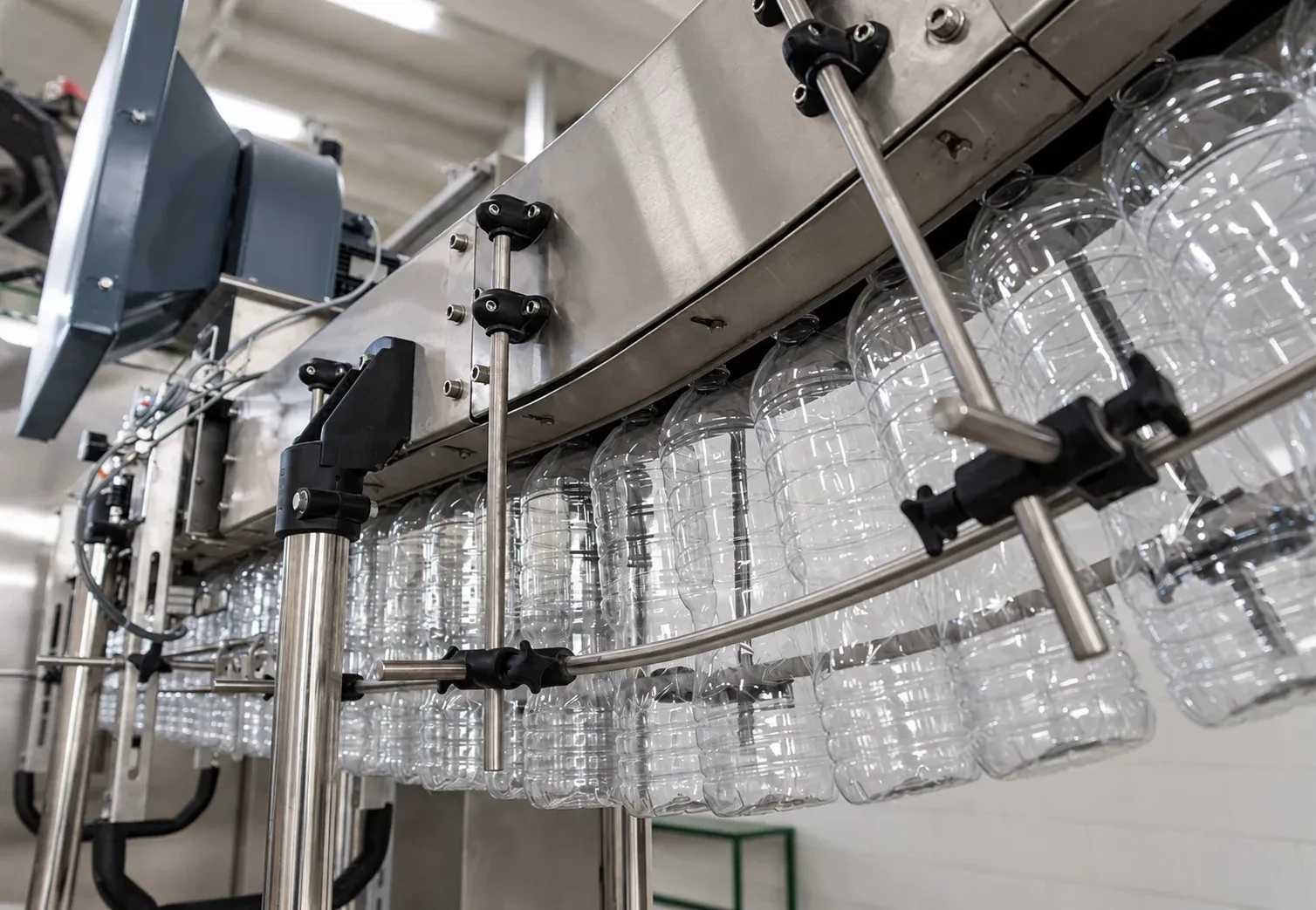
Preform handling and unscramblers. Preforms need to be oriented neck up before entering the heating tunnel, which vibratory or centrifugal unscramblers handle at speed, feeding a steady stream without jams.
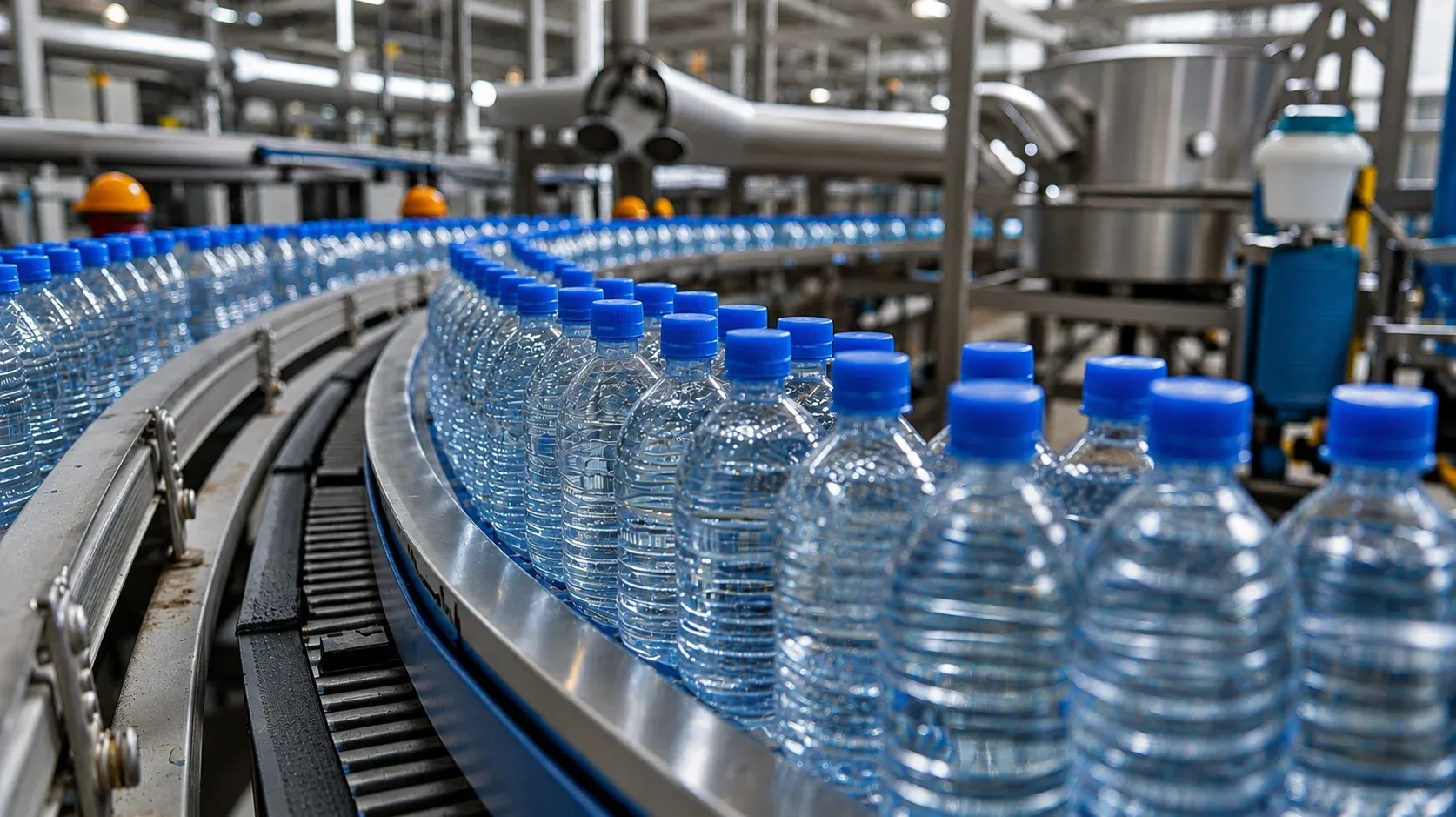
Downstream conveyors. Once formed, bottles move to filling, capping, or labeling without bottlenecking the machine itself buffer accumulation is what keeps upstream and downstream speeds from fighting each other.
Modern PET Bottle Production Methods: Automation, Blow Molding & Process Control
Here's what's genuinely changed the game: closed loop process control. Older machines ran on fixed heating and pressure recipes set it once, hope the preforms stayed consistent. Modern systems don't work that way anymore.
Servo driven stretch rods now adjust speed and travel distance in real time, compensating for tiny variations in preform weight or temperature. Infrared lamp zoning has gotten granular enough that individual lamp banks dial up or down mid run based on feedback from wall thickness sensors on the mold. If a batch of preforms comes in slightly heavier than spec, the machine notices and adjusts before producing a run of overweight bottles.
This matters because wall thickness variation is where most quality complaints and wasted resin come from. A bottle too thick in the base wastes material; one too thin in the sidewall risks failing under transport pressure. Real time sensor loops catch this drift early not flashy, but the single biggest efficiency lever most plants aren't fully using yet.
Automation has also crept into changeovers. Recipe based controls let operators switch formats say, from a 500ml still water bottle to a 1L carbonated format by loading a saved profile instead of manually re tuning a dozen parameters, cutting downtime from hours to minutes.
Comparative Analysis: Rotary vs Linear Stretch Blow Molding Systems
Choosing between a rotary and a linear system is usually the first big decision a plant makes, and it shapes everything downstream floor layout, staffing, and capital budget alike.
| Parameter | Rotary Stretch Blow Molding | Linear Stretch Blow Molding |
|---|---|---|
| Output Speed (Bottles/Hour) | 15,000–60,000+ | 1,000–12,000 |
| Energy Efficiency per Unit | Higher continuous motion reduces idle cycles | Lower stop-start cycling adds energy overhead |
| Footprint & Space Requirements | Compact relative to output; circular layout | Larger footprint per unit of output; linear layout |
| Best Suited Production Scale | High volume, single or limited SKU runs | Small to mid volume, frequent format changes |
Neither system is objectively "better" it's a question of what your production volume and SKU mix demand. A bottling operation running one format around the clock benefits from rotary output; a co packer juggling a dozen bottle shapes a week is often better served by a linear system's flexibility, even at a lower per hour ceiling.
Key Factors for Improving PET Bottle Production Efficiency, Quality & Energy Savings
A few operational habits separate plants that run lean from plants that bleed margin without realizing it.
Preform storage matters more than people think. PET is hygroscopic it absorbs moisture from the air. Preforms stored in a humid warehouse for weeks will hydrolyze slightly, showing up as brittleness or hazing downstream. Climate controlled storage isn't a luxury; it's cheap insurance against a whole category of defects.
Compressed air leakage is a silent budget killer. Because the blow stage runs at such high pressure, even small leaks add up to real money over a year of continuous operation. A quarterly leak-detection audit typically pays for itself within a few months.
Reliable equipment partnerships beat outsourcing to generic plastic bottle manufacturers. Owning your production capability instead of relying on third party plastic bottle manufacturers for every run tends to favour in house or dedicated partner setups on lead times, quality variance, and per unit pricing once volume passes a certain threshold and it keeps you out of the queue other plastic bottle manufacturers are standing in.
Track light weighting opportunities. Every gram removed from a bottle design, if the wall thickness math still holds up structurally, compounds into meaningful resin savings across a full run.
Why Choose Seppa Solutions for PET Bottle Production and Beverage Manufacturing Solutions?
This is exactly the territory Seppa Solutions works in every day. We build and integrate rotary and linear stretch blow molding systems every pet bottle manufacturing machine we spec is sized around your actual SKU mix, not pulled off a generic catalogue sheet. Our engineering team works through mold design, cavity configuration, and heating profile setup alongside your operators, so the equipment fits your floor instead of forcing your floor to fit the equipment.
Beyond the forming machinery, we handle the turnkey picture compressors, chillers, preform handling, downstream conveying, and integration with filling and capping lines, matched to your real production numbers rather than an idealized best case.
Frequently Asked Questions About PET Bottle Manufacturing
1. How do I choose between a linear and rotary blow molding system?
Base the decision on volume and SKU variety. Rotary systems suit high volume, limited format production; linear systems suit smaller runs with frequent changeovers. Match the choice to your actual production schedule, not your aspirational future output.
2. What's the most effective way to cut energy use on a blow molding line?
Start with compressed air. Fixing leaks, right sizing compressors, and recovering waste heat from chillers typically deliver the fastest payback of any efficiency project on the floor.
3. Why are my bottles coming out cloudy or unevenly clear?
Cloudiness usually traces back to inconsistent mold temperature or preforms that were stretched too cold. Check your chiller performance and infrared heating profile before assuming it's a resin quality issue.
4. How much preform weight variation is acceptable?
Most plants target a tolerance within about 0.5–1% of nominal weight on any pet bottle making machine. Anything wider starts showing up as visible wall thickness inconsistency on the finished bottle.
5. What's the realistic path to scaling output without a full new line?
Look at cavity count upgrades, changeover time reduction, and closed loop process control retrofits before assuming you need an entirely new machine. Many plants find meaningful headroom in equipment they already own.