Walk into any bottling plant and you'll hear it before you see it that steady, rhythmic thump of preforms dropping into molds, hundreds of times a minute. Most people who drink from a plastic water bottle never think about where it came from. But if you're running a beverage line, understanding pet bottle manufacturing isn't optional it's the difference between a production run that hums along and one that eats your margins with scrap and downtime.
What Is PET Bottle Manufacturing? An Overview of the Complete Process
Polyethylene terephthalate, or PET, became the beverage industry's go-to material because it's light, clear, and holds pressure well enough to keep carbonated drinks fizzy for months. Pet bottle manufacturing turns that raw resin into a finished container starting as small plastic pellets and ending as the bottle on a supermarket shelf.
The resin is chosen for its strength to weight ratio. A liter of soda in a PET container weighs a fraction of what glass would, which cuts shipping costs and reduces breakage. That's why, decades after PET first showed up in soft drink bottles, it still dominates water, juice, and carbonated beverage packaging. Any serious conversation about pet bottle manufacturing starts with understanding why this plastic won out over alternatives like HDPE or glass. Once you understand how pet bottles are made, the material choice makes a lot more sense.
Step by Step PET Bottle Manufacturing Process: From PET Resin to Finished Bottle
If you've ever wondered how pet bottles are made, the answer involves a handful of tightly controlled stages.
Drying the resin. PET pellets are hygroscopic they pull moisture straight out of the air. Before anything else happens, the resin gets dried at around 160-180°C for four to six hours. Skip this step and you'll see hydrolysis during melting, which weakens the polymer and shows up later as brittle, cloudy bottles.
Pet preform manufacturing. This is where injection molding takes over. Dried resin gets melted and injected into a preform mold a stubby, test tube shaped piece with the finished neck and threads already formed. Pet preform manufacturing demands precision because the preform's wall thickness distribution determines how evenly the final bottle will stretch. Get pet preform manufacturing wrong here and every later step just inherits the problem.
Reheating and conditioning. In a two stage system, preforms cool, get stored, and later pass through an infrared oven that brings them back up to stretch temperature typically 95-105°C for standard PET. Get this wrong and you'll fight thermal stress lines all run.
Stretch blow molding. This is the step most people picture when they think about how pet bottles are made. A stretch rod extends the softened preform lengthwise while high pressure air, often 35-40 bar, forces the plastic outward against the mold walls. The biaxial orientation gives PET bottles their clarity and burst strength a stubby preform becomes a full size bottle in under two seconds.
Trimming and inspection. Excess flash gets trimmed, and bottles run through vision systems checking wall thickness, base clearance, and neck finish before reaching a filling line.
Key Machines Used in PET Bottle Manufacturing and Their Functions
The equipment on the floor matters as much as the process itself, and it's a big part of the answer if someone asks how pet bottles are made at scale. A few pieces of hardware carry most of the load:
Injection molding units handle pet preform manufacturing, using precision hot runner systems to keep melt temperature consistent across every cavity critical when running 32 or 96 cavities at once. This is the pet preform manufacturing stage most plant managers watch closest, since defects here ripple through every later step.
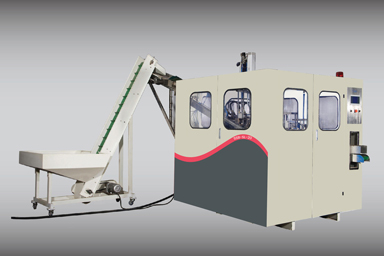
The pet bottle manufacturing machine itself, whether single stage or two stage, is the centerpiece. Its clamping force, cycle speed, and mold change flexibility largely determine your throughput ceiling. Plenty of operators shop for a pet bottle manufacturing machine on price alone, then regret it the first time a mold change eats an entire shift.
High pressure compressors supply the air that inflates preforms into bottles. Moisture or oil contamination in the air line will show up as surface defects on finished bottles.
Mold temperature controllers keep blow molds at a consistent temperature, usually 10-15°C, so each bottle cools and sets identically.
Reheat ovens condition preforms before stretching, using rows of quartz or halogen lamps with adjustable zones to correct for wall thickness variation.
Choosing the right pet bottle making machine for your volume and SKU mix is one of the biggest capital decisions a packaging operation makes, and it's worth spending real time on before signing a purchase order. A pet bottle making machine sized for the wrong volume range will either sit half-idle or run flat-out and still miss demand.
Comparative Analysis: Single Stage vs. Two Stage Production Systems
| Parameter | Single Stage System | Two Stage System |
|---|---|---|
| Best Suited Production Volume | Low to medium volume, frequent SKU changes | High volume, long production runs |
| Footprint & Equipment Complexity | Compact, fewer machines, simpler layout | Larger footprint, separate injection and blow molding stages |
| Design Flexibility (Shape Changes) | Fast changeovers, easier to test new bottle shapes | Slower changeovers, better suited to fixed designs |
| Capital Investment Required | Lower upfront cost | Higher upfront cost, lower cost per bottle at scale |
Neither system is objectively "better." A contract bottler running dozens of small orders benefits from the flexibility of a single stage pet bottle making machine. A beverage brand pushing millions of identical units wants the throughput a two stage pet bottle manufacturing machine delivers.
PET Bottle Manufacturing for the Beverage Industry: Applications and Benefits
Carbonated soft drinks need containers that hold internal pressure without creeping, which is why wall thickness and base design get so much attention. Water bottles prioritize lightweighting instead, so manufacturers push resin usage down as far as strength allows. Juice and dairy adjacent beverages often need oxygen barrier treatments layered onto standard PET, since oxygen ingress degrades flavour over time.
Across all these categories, pet bottle manufacturing gives brands a container that's shatterproof, lightweight, and cheap to transport compared to glass while still looking clear and premium on a shelf. It's a big part of why pet bottle manufacturing has quietly become the backbone of the beverage packaging industry.
Common Challenges in PET Bottle Manufacturing and How Modern Technology Solves Them
Wall thickness variation is the most common headache on a blow molding floor uneven preform heating causes some sections to stretch more than others, leaving thin spots that fail pressure testing. Modern reheat ovens with zone specific lamp control largely solve this.
Thermal stress lines, those faint white marks near a bottle's shoulder, come from stretching PET outside its ideal temperature window. Tightening oven control and stretch rod timing usually clears it up.
Neck deformation happens when the preform's crystalline neck finish gets exposed to excess heat during reheating. Neck cooling systems, keeping cool air flowing across the threads, prevent this without slowing the line.
Energy consumption is the quieter problem reheat ovens and compressors are the biggest power draws on any pet bottle manufacturing machine. Servo driven stretch rods and variable speed compressors have cut energy use meaningfully over older hydraulic systems.
Why Choose Seppa Solutions for PET Bottle Manufacturing and Beverage Production?
Seppa Solutions builds equipment for operators who can't afford unplanned downtime. Every pet bottle manufacturing machine leaving their facility is engineered around real world duty cycles, not spec sheet numbers, with mold temperature controllers, reheat systems, and air handling matched to work together instead of bolted on as afterthoughts. For teams evaluating a new pet bottle making machine or a full beverage processing line, Seppa's engineers work through cavity counts, cycle times, and layout constraints before a quote gets written which saves clients from equipment mismatches that surface months into production. Whether the project calls for pet preform manufacturing capacity or a full pet bottle manufacturing line, the principle stays the same: match the equipment to the job.
Final Thoughts: Choosing the Right PET Bottle Manufacturing Solution for Your Business
The right setup for pet bottle manufacturing depends on your volume, your SKU variety, and how much capital you're willing to commit upfront. Get the fundamentals right resin drying, preform quality, reheat precision, and blow molding control and the rest of the pet bottle making machine setup tends to fall into place. Cut corners on any one of those, and you'll spend the next year chasing quality complaints instead of growing output. At the end of the day, pet bottle manufacturing rewards operators who respect the process rather than rushing it.
Frequently Asked Questions
1. What's the difference between a preform and a finished bottle?
A preform is the small, thick walled piece produced during pet preform manufacturing already carrying the finished neck and threads. The bottle is what you get once that preform is reheated and stretch blow molded.
2. How is energy efficiency managed on a production line?
Mostly through servo driven components replacing hydraulic ones, plus zone specific reheat control that avoids wasting energy on unnecessary temperature swings.
3. What role does recycling play in modern resin usage?
Recycled PET is increasingly blended into virgin resin, particularly for water bottles, as brands respond to sustainability targets and regulatory pressure on packaging waste.
4. How do you troubleshoot common molding flaws?
Start with the preform. Most defects thin spots, stress lines, hazing trace back to uneven wall thickness or incorrect reheat temperatures rather than the blow molding stage itself.
5. How can a facility scale up production output?
Adding cavities to the injection stage, upgrading to a faster pet bottle manufacturing machine, or moving from single stage to two stage equipment are the three main levers, each with its own cost and flexibility trade offs.